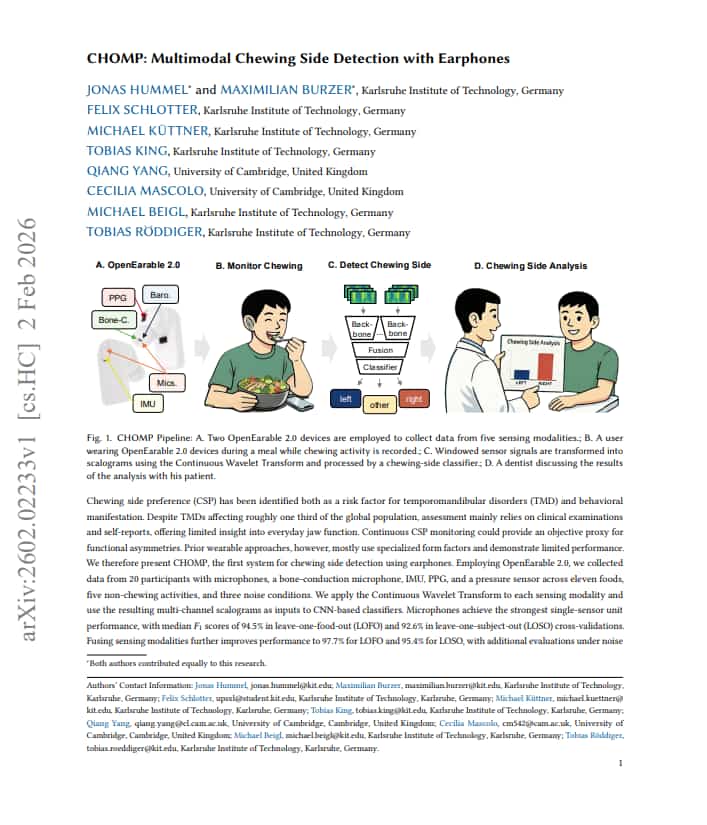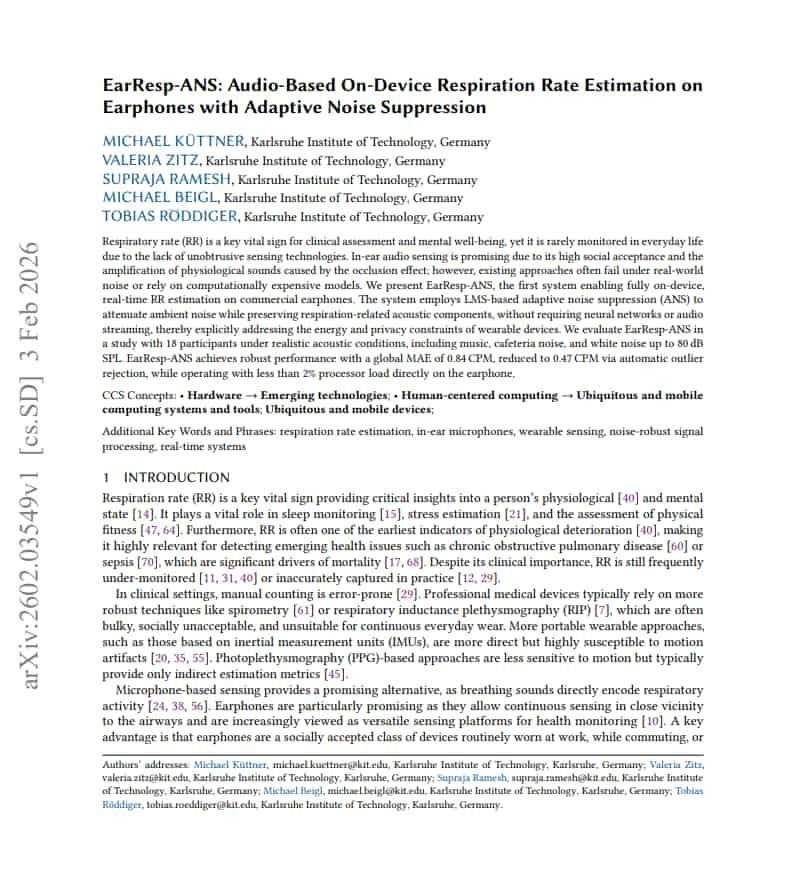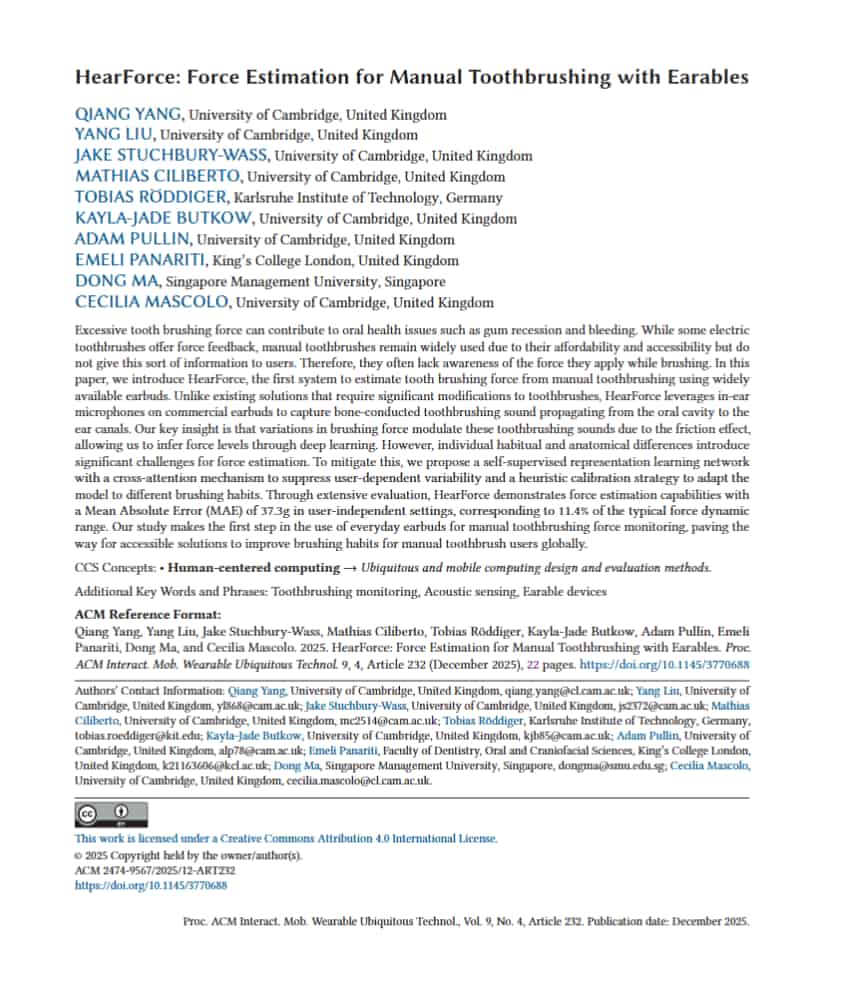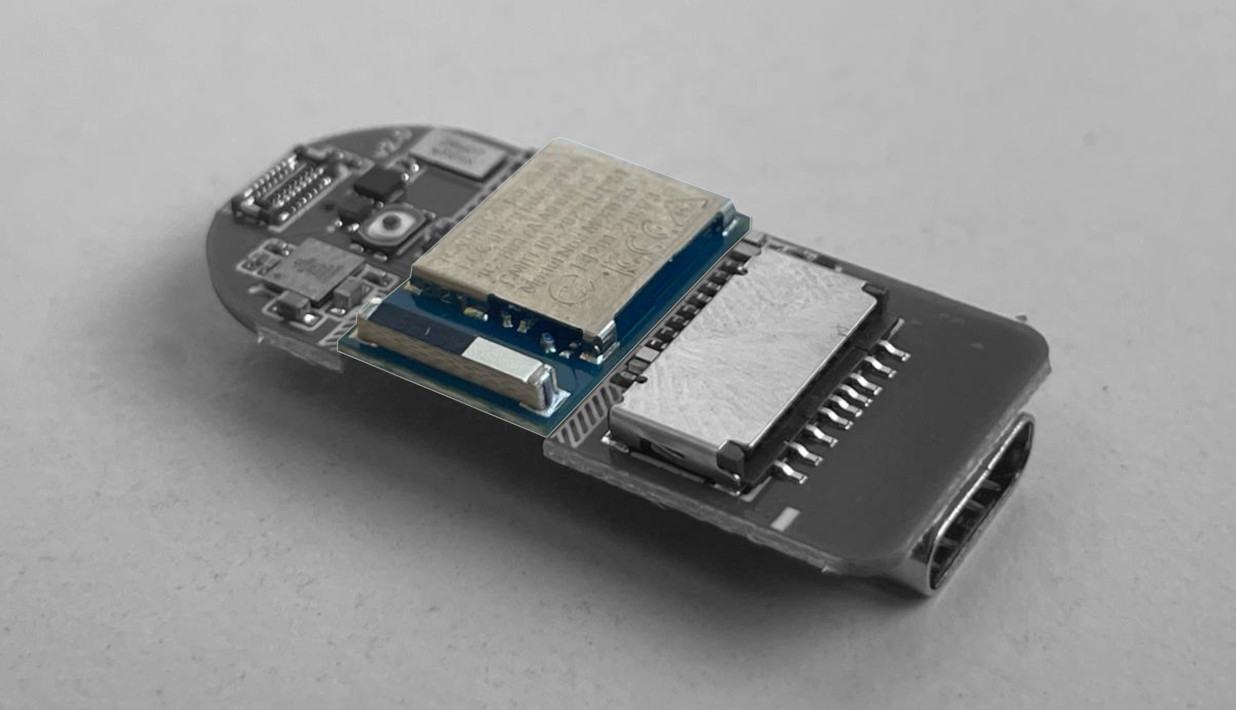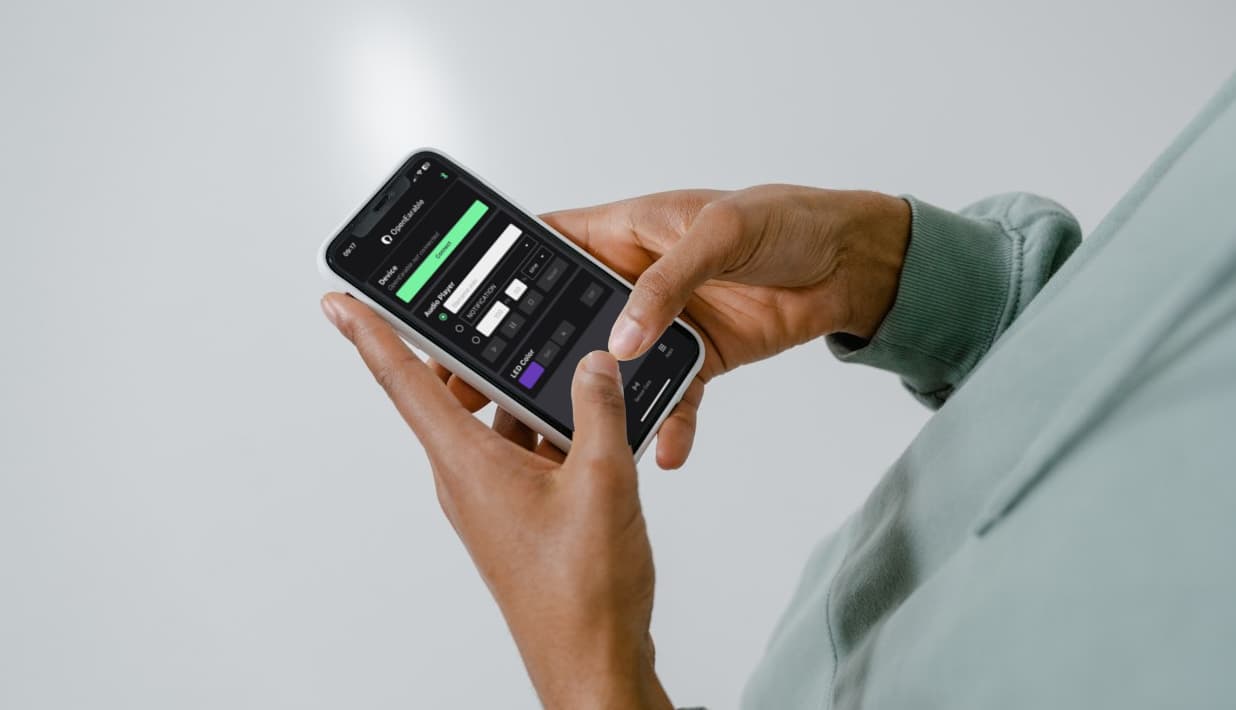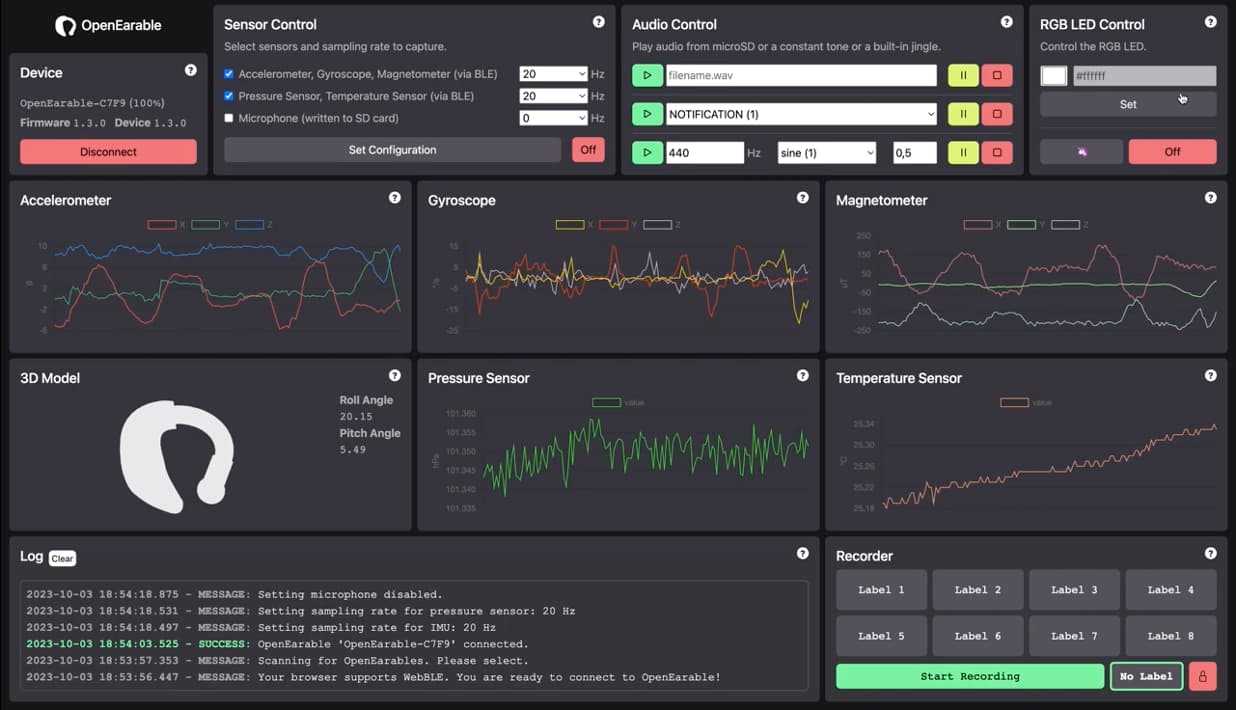
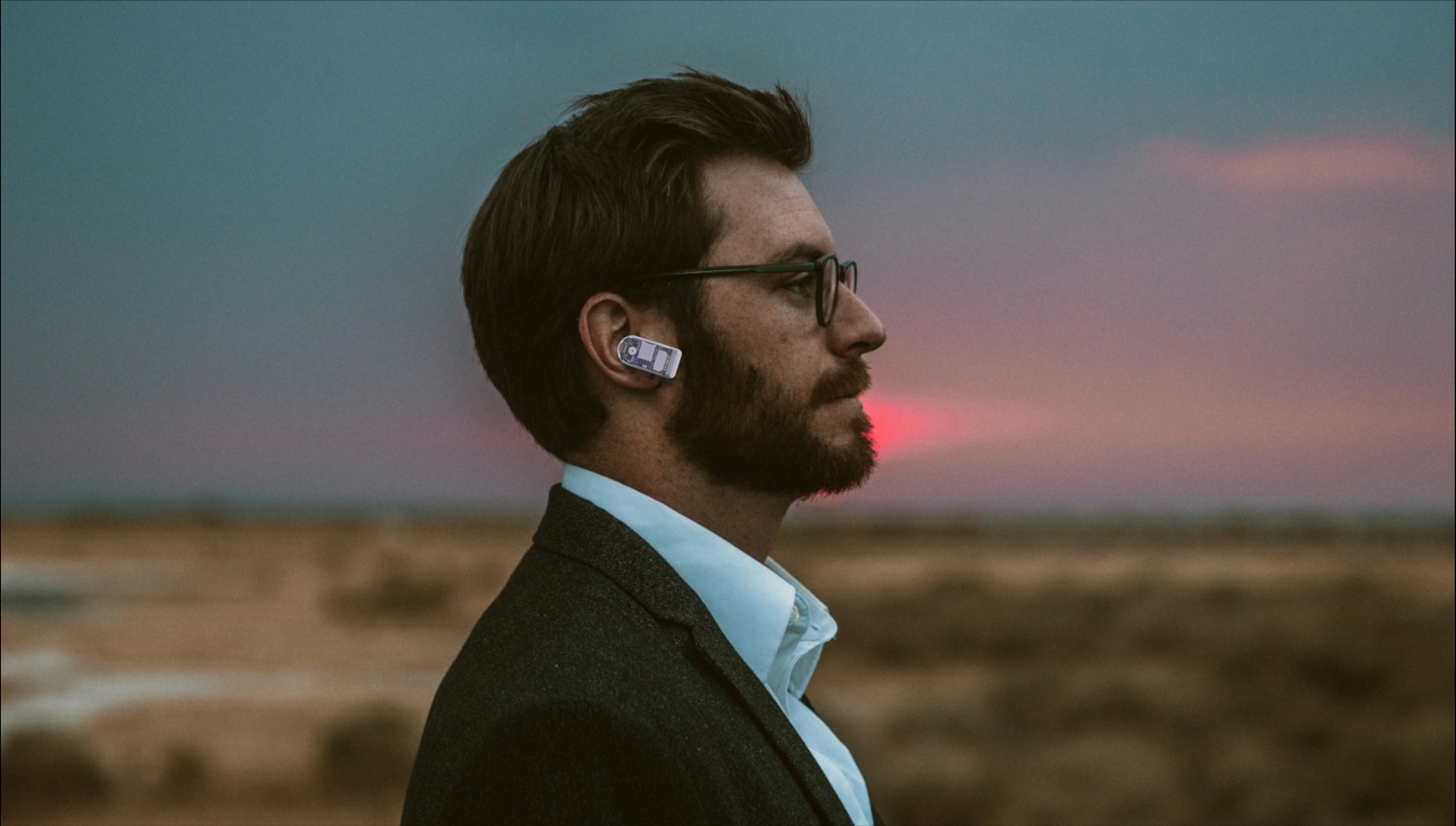
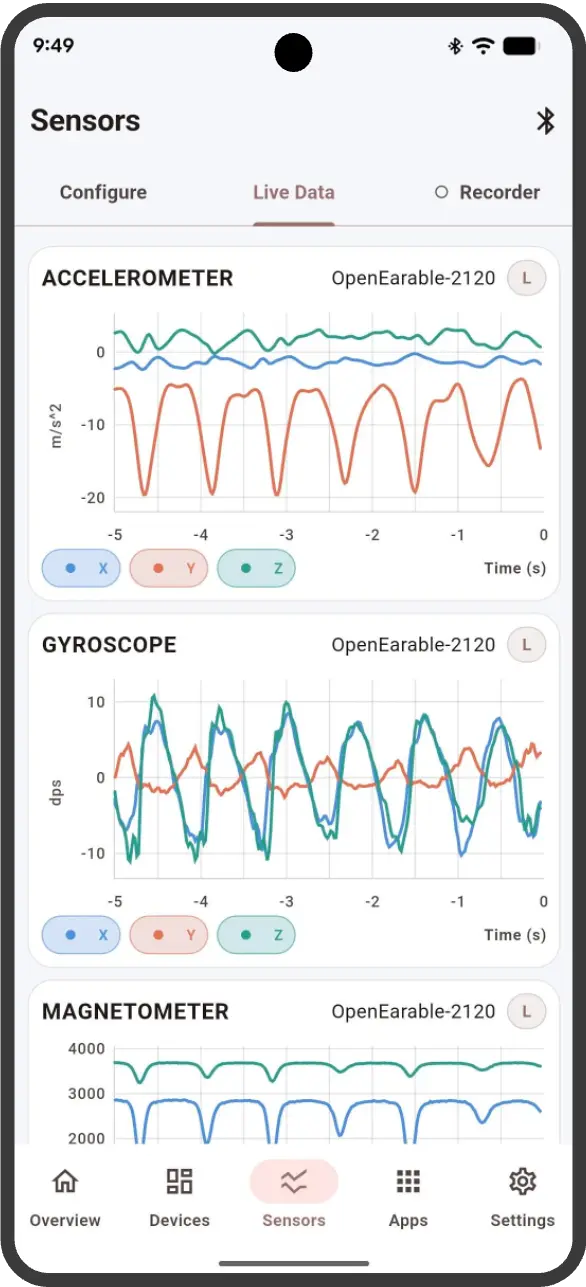


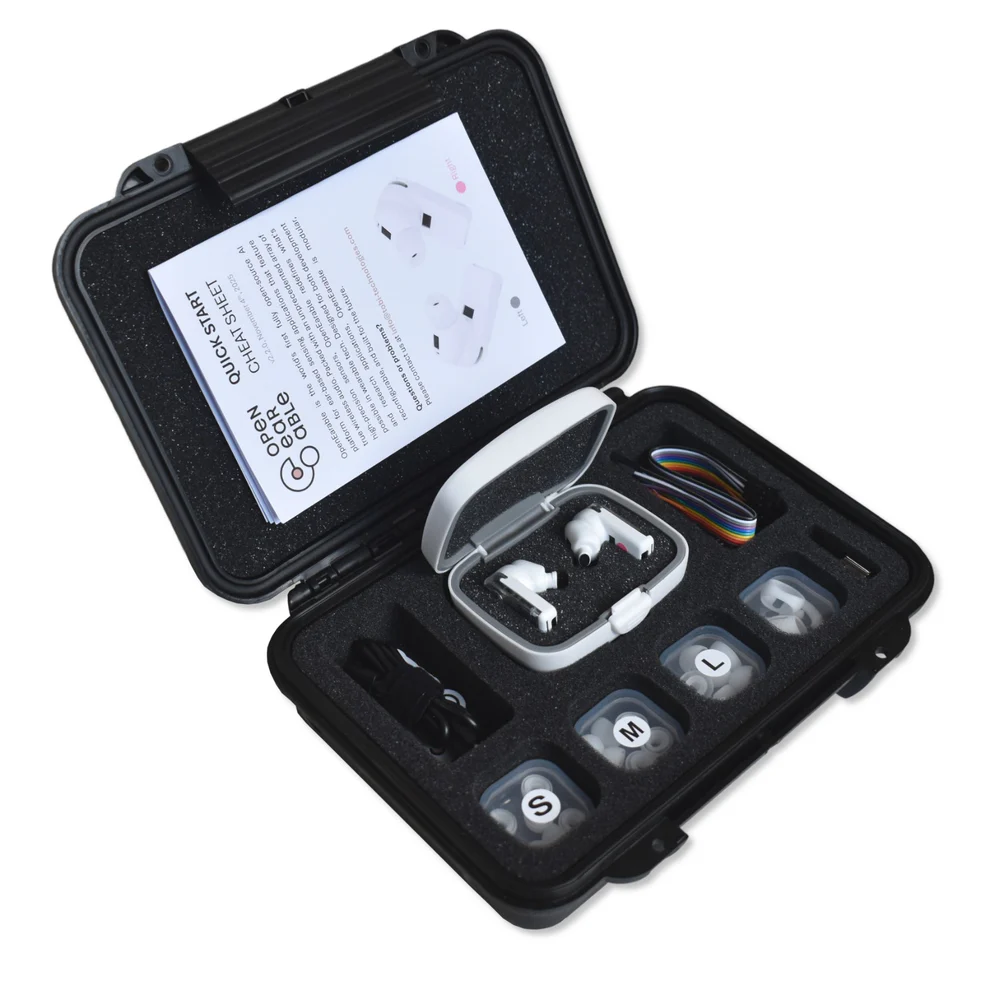
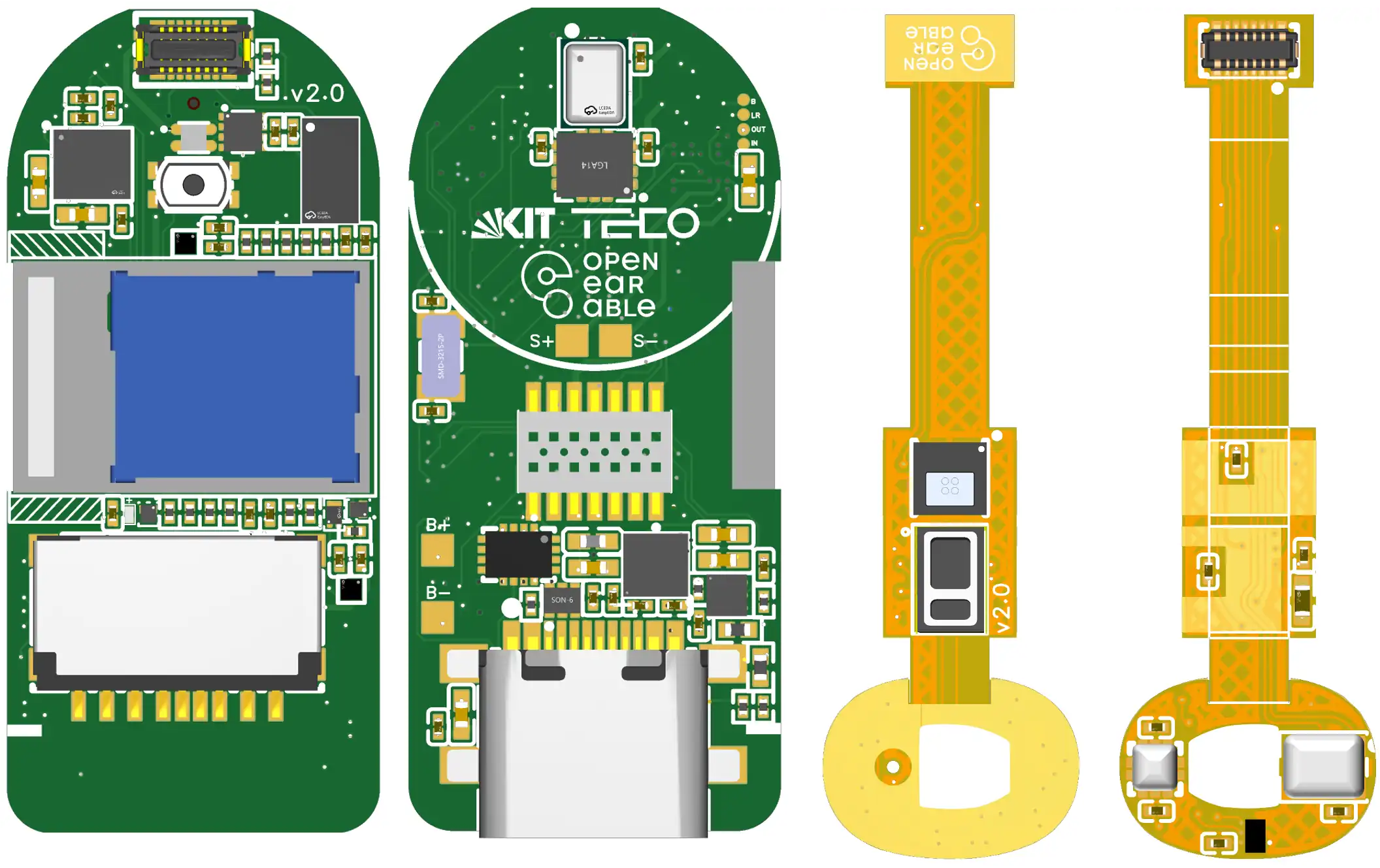
OpenEarable is the world's first fully open-source AI platform for ear-based sensing applications with true wireless audio. Packed with an unprecedented array of high-precision sensors, OpenEarable redefines what's possible in wearable tech. Designed for both development and research applications, OpenEarable is modular, reconfigurable, and built for the future.
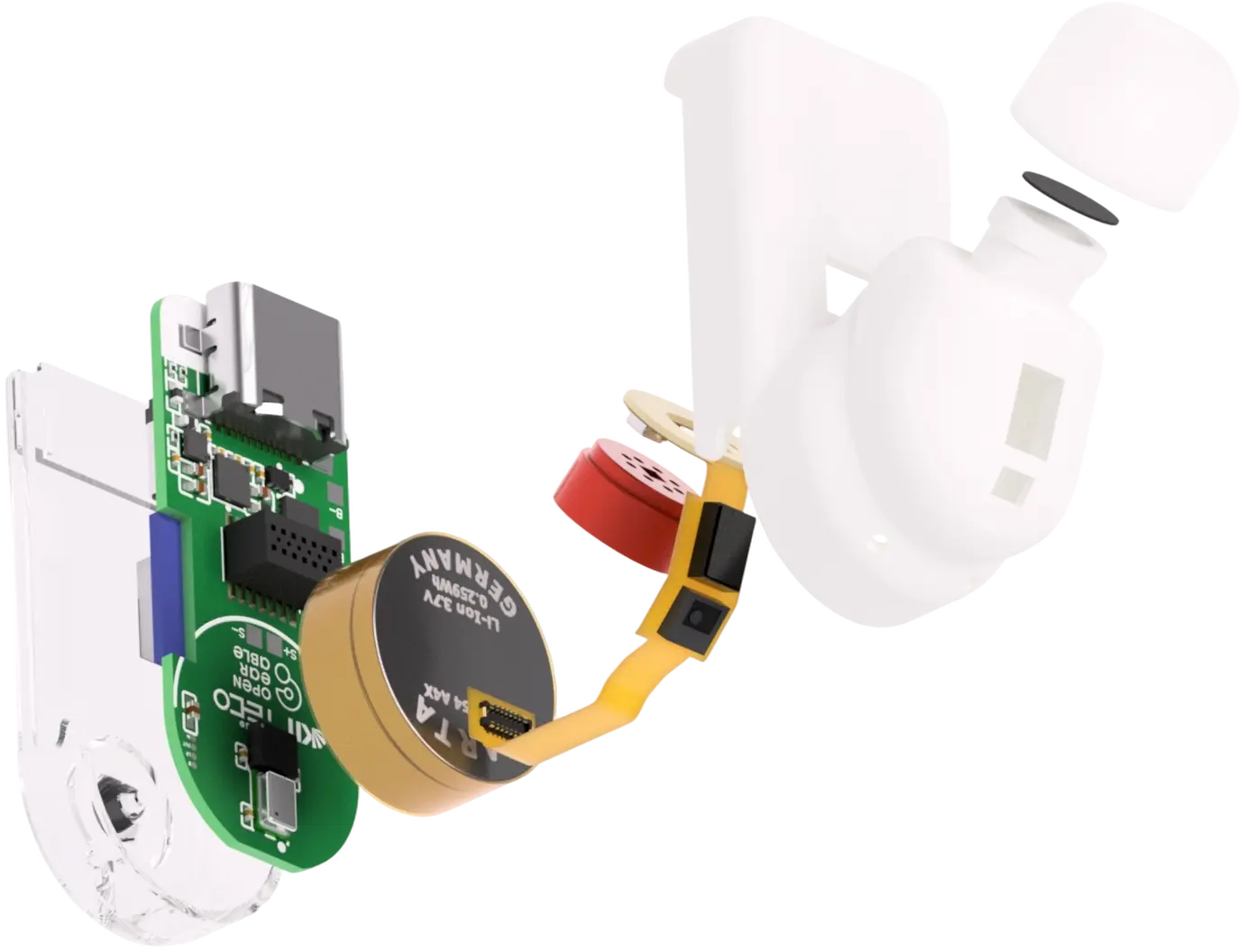
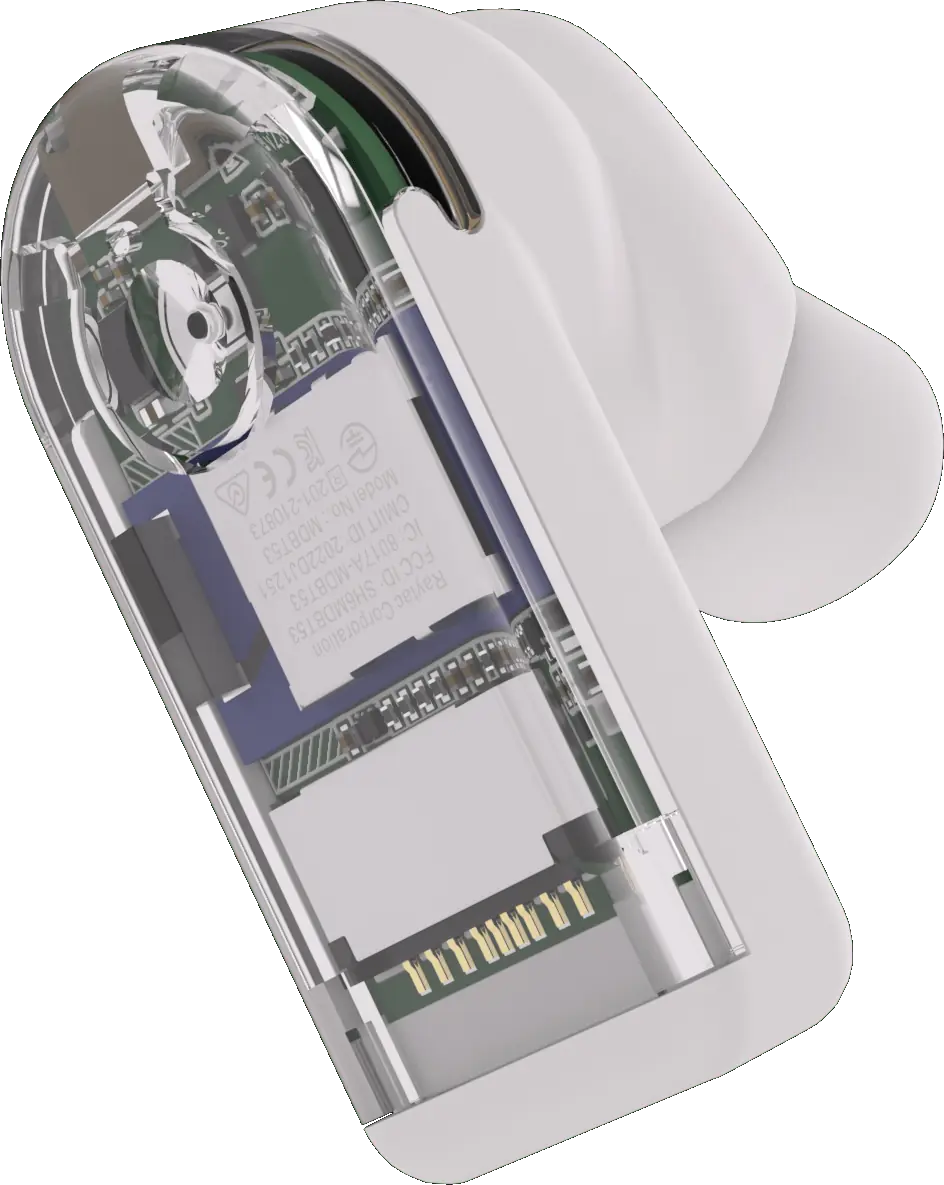
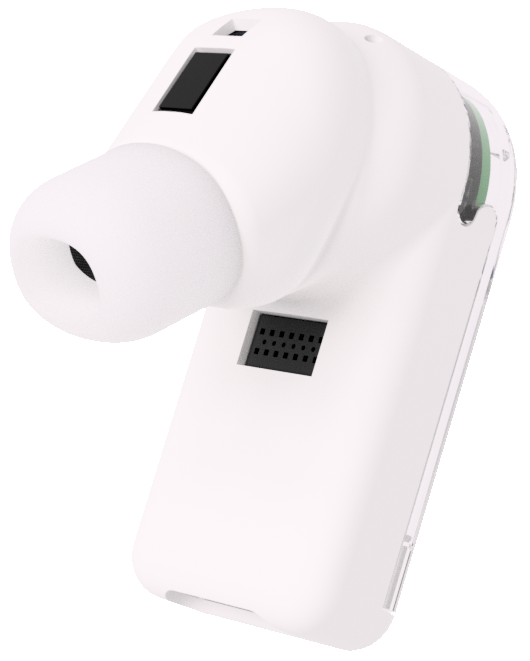















 … and many more.
Check out the papers below for the latest research published with OpenEarable. Want your project or paper to be featured here? Just send us a message!



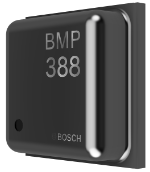
Maximum selectable rates for local recording and wireless sensor streaming.
| Sensor | microSD recording | Wireless streaming* |
|---|---|---|
| Air microphones (inner/outer) | 48 kHz | 48 kHz** |
| Bone conduction accelerometer | 6.4 kHz | 800 Hz |
| Photoplethysmography (PPG) | 4.096 kHz | 512 Hz |
| 9-axis IMU | 800 Hz | 100 Hz |
| Optical skin temperature | 64 Hz | 64 Hz |
| Ear canal pressure | 200 Hz | 200 Hz |




| OpenEarable 2.0.X | OpenEarable 1.3 | AirPods Pro 3 | ||
|---|---|---|---|---|
|
Audio
|
Playback | LE Audio | via SD card | BT Audio |
| Inward facing microphone | 1 | 1 | 1 (no access) | |
| Outward facing microphone | 1 | 2 | ||
| Bone Conduction microphone | 1 | 1 (no access) | ||
|
Sensors
|
IMU | 9-Axis + 3-Axis | 9-Axis | 6-Axis |
| PPG | raw access to green, red, infrared, ambient channels |
Heart Rate | ||
| Temperature | skin + ambient | ambient | ||
| Ear-Canal pressure | ||||
|
Memory
|
Storage | microSD card slot + internal SPI Flash |
microSD card slot | |
|
Battery
|
Battery life | up to 8 hours | up to 4 hours | up to 8 hours |
| Charging port | USB-C | microUSB | charging case | |
|
Open-Source
|
Hardware | |||
| Firmware | ||||
| Software |
pip install open-wearablesSensorDataset:
from open_wearables import SensorDataset

dataset = SensorDataset("recording.oe")
df = dataset.get_dataframe()
imu_df = dataset.imu.df
audio_df = dataset.get_audio_dataframe()